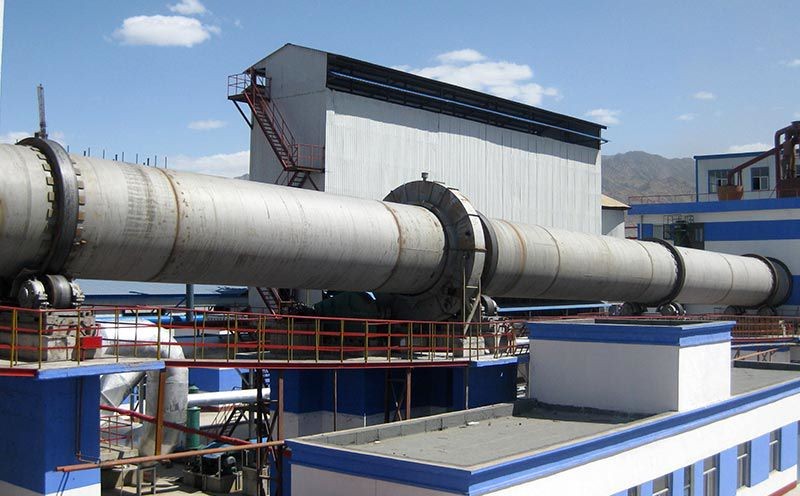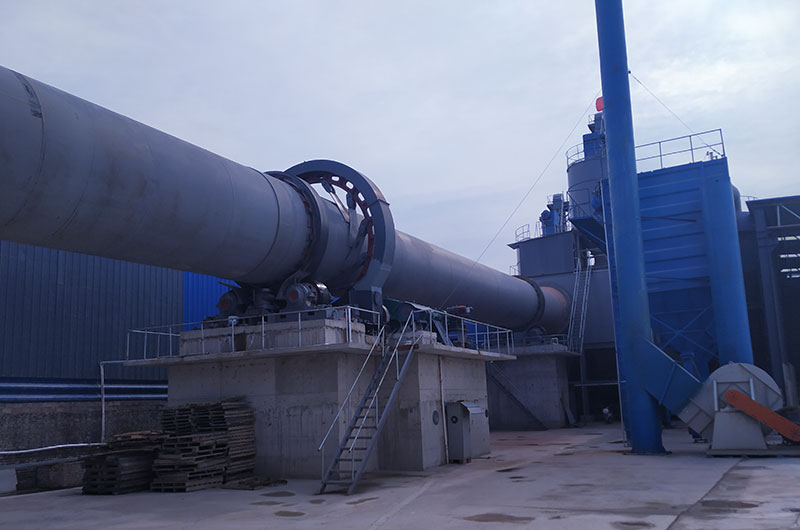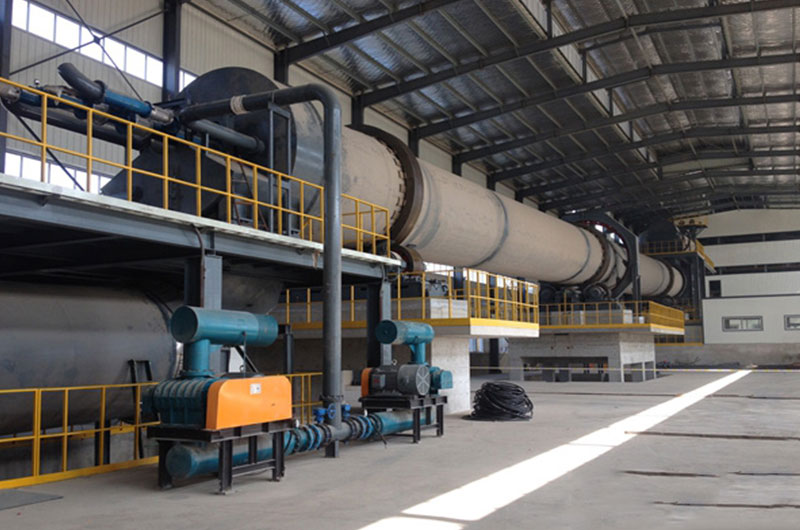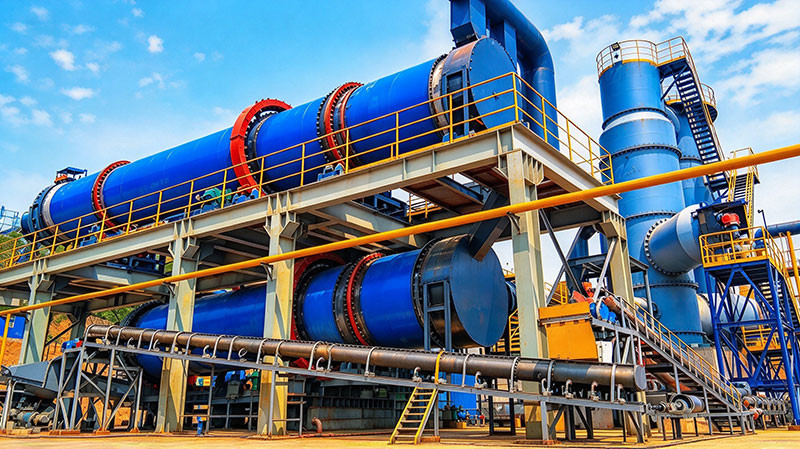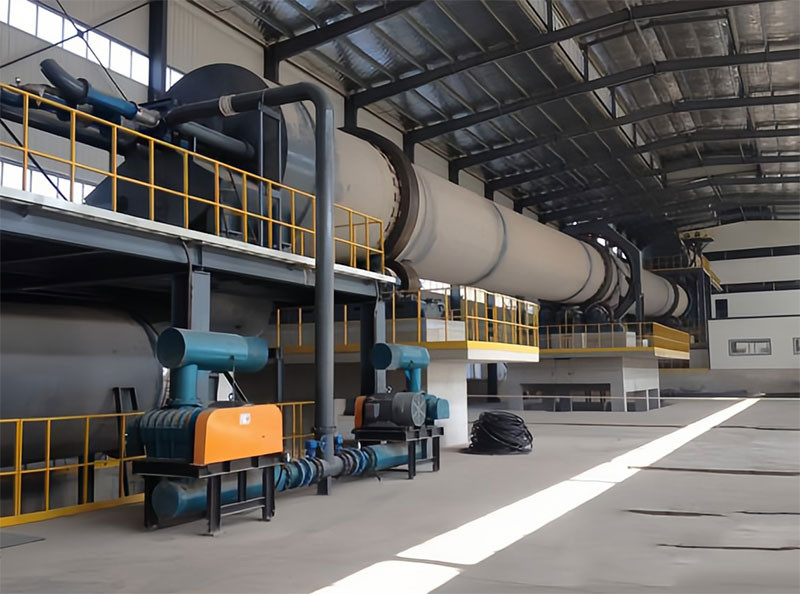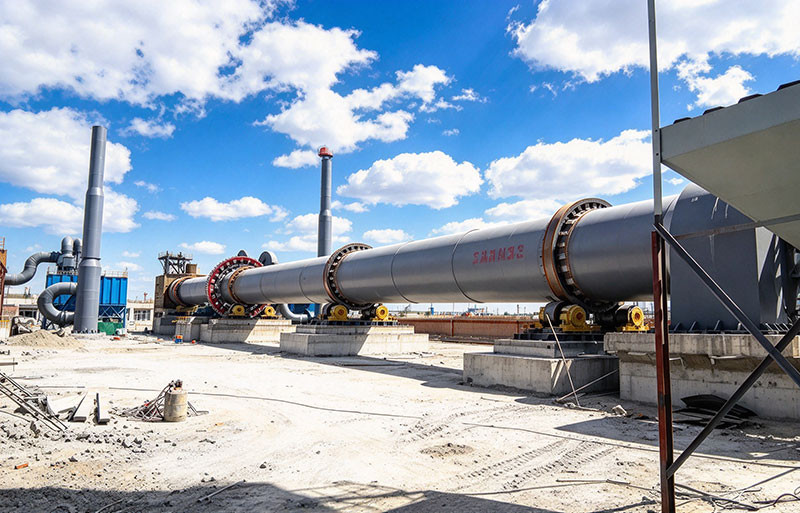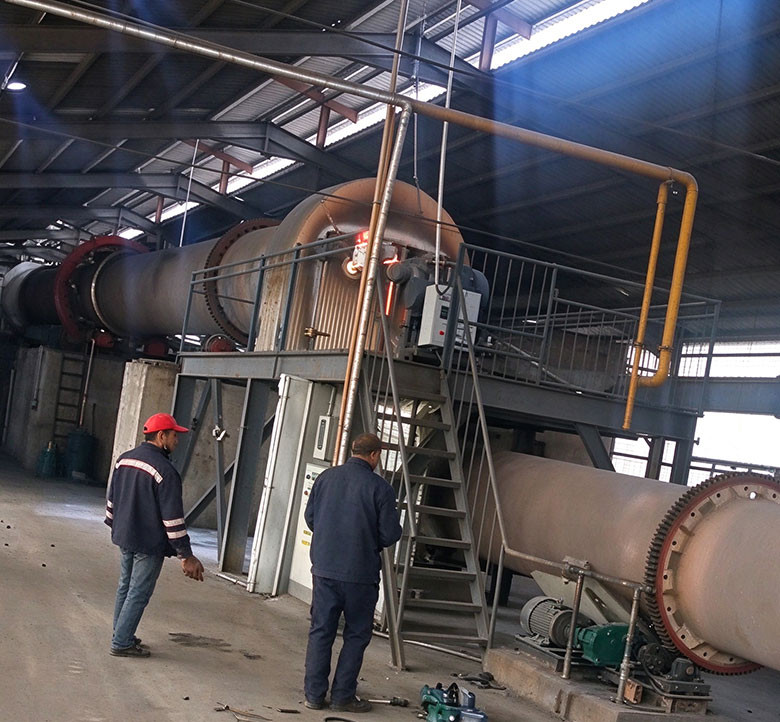
The rotary kiln is one of the most versatile pieces of industrial equipment — serving industries from cement and lime to metallurgy, chemicals, and environmental remediation. For buyers evaluating rotary kilns, two questions arise early: What type do I need? and How much will it cost?
This article covers rotary kiln classification, major types and applications, pricing factors, and total cost of ownership guidance.
Part I: Rotary Kiln Classification
By Process Technology
Wet-Process Kiln
Feed enters as slurry (30–40% moisture). Very long kilns (L/D 30–40:1) with a dehydration zone. Offers uniform blending and low dust, but high fuel consumption. Largely phased out for new construction but still operating worldwide.
Semidry-Process Kiln (Lepol/Grate)
Feed is pelletized with 10–15% water, pre-calcined on a traveling grate, then enters a kiln only one-third the usual length. Offers fuel efficiency comparable to preheater kilns with much lower dust emissions. Advantages include uniform clinker size and suitability for high-moisture raw materials.
Available sizes: φ1.4 × 33 m to φ3.2 × 50 m, capacity 0.9–42 t/h.
Dry-Process Kiln
Feed enters as dry powder. Long kilns (L/D 30–35:1) with chain sections at the feed end for heat exchange. Suitable for power cogeneration due to high exit gas temperatures. High-maintenance chain sections are essential for efficiency.
Suspension Preheater Kiln (SP Kiln)
Feed is preheated and partly calcined in a tower of heat-exchange cyclones before entering the kiln. Most common design: parallel four-stage preheater, up to 8,000 TPD. Exit gas temperature ~340 °C. Specific fuel consumption: ~750 kcal/kg clinker.
Drawback: high volatile concentrations (alkalies, sulfur, chlorides) cause plugging — requiring alkali bypass systems.
Precalciner Kiln (NSP Kiln) — The Modern Standard
A suspension preheater kiln with an added flash furnace (precalciner) at the base of the preheater tower. Burns 30–50% of total fuel in the calciner, producing 50–70% more clinker than a conventional preheater kiln of equal diameter. Reduces heat load on the burning zone, extending refractory life. Can use low-grade fuels in the auxiliary burner.
The dominant kiln type for new cement plants worldwide — capacities from 1,000 to 12,000+ TPD.
By Heating Method
| Type | Description | Applications |
|---|---|---|
| Direct-fired | Material contacts flame and combustion gases | Cement, lime, metallurgical calcination |
| Indirect-fired | Heat through shell wall; no flame contact | Hazardous materials, oil recovery, steel turnings |
By Application
| Application | Temperature | Materials |
|---|---|---|
| Cement production | 1,350–1,450 °C | Limestone, clay → clinker |
| Lime production | 1,100–1,300 °C | Limestone → quicklime |
| Magnesium/dolomite | 1,100–1,250 °C | Dolomite → calcined dolomite |
| Zinc oxide | 1,100–1,200 °C | Zinc ore, EAF dust → ZnO |
| Iron ore pelletizing | 1,250–1,350 °C | Iron concentrate → pellets |
| Hazardous waste | 900–1,200 °C | Chemical, pharma, contaminated soil |
| Soil remediation | 300–900 °C | Petroleum, PCB-contaminated soil |
| Tire pyrolysis | 400–700 °C | Scrap tires → oil, carbon black |
| Fly ash vitrification | 1,200–1,450 °C | Incineration ash → inert slag |
Part II: Pricing Factors and Ranges
What Drives Price
Kiln size and capacity — the most obvious factor. Larger kilns = more steel, larger castings, heavier drives.
Material quality — shell plate grade (Q235B vs. Q345B vs. ASTM A516), girth gear casting quality (cast steel vs. iron, tooth precision), tire ring manufacturing (forged vs. cast), and refractory specification all significantly affect price.
Process complexity — a simple dry kiln costs far less than a precalciner system with cyclone tower, calciner, tertiary air duct, and environmental systems.
Application-specific engineering — hazardous waste kilns (secondary combustion chambers, quench systems), zinc oxide kilns (oxidation chambers, desulfurization), indirect-fired kilns (external heating jackets) all add cost.
Geographic factors — raw material costs, labor, shipping, and currency exchange rates vary by region.
Indicative Price Ranges
Cement Rotary Kilns
| Class | Capacity | Price Range |
|---|---|---|
| Small (φ1.6–2.5 m) | 200–800 TPD | |
| Medium (φ3.0–4.0 m) | 1,000–3,000 TPD | |
| Large (φ4.5–5.6 m) | 3,000–8,000 TPD | |
| Mega (φ6.0+ m) | 8,000–12,000 TPD |
These cover kiln shell, girth gear, drive, and supports only — not preheater, cooler, or environmental systems. A complete cement line costs 5–10× the kiln shell price.
Lime Rotary Kilns
| Class | Capacity | Price Range |
|---|---|---|
| Small (φ1.5–2.5 m) | 50–200 TPD | |
| Medium (φ2.5–3.5 m) | 200–600 TPD | |
| Large with preheater (φ3.5–4.5 m) | 600–1,500 TPD |
Metallurgical and Specialty Kilns
| Application | Size | Price Range |
|---|---|---|
| Zinc oxide | φ1.2–2.5 m | |
| Dolomite/magnesium | φ1.6–3.5 m | |
| Iron ore pelletizing | φ3.0–6.0 m | |
| Hazardous waste incineration | φ1.5–3.8 m | |
| Steel turnings calcination | φ1.0–2.0 m | |
| Tire pyrolysis | φ1.2–2.5 m |
Note: Equipment cost only — excludes civil works, installation, and commissioning. Total installed cost is typically 1.5–3× the equipment price.
Part III: Purchase Price vs. Total Cost of Ownership
This is the most critical and most overlooked aspect of rotary kiln economics.
20-Year Lifecycle Cost Breakdown
| Cost Category | Share |
|---|---|
| Equipment purchase | 10–20% |
| Installation & commissioning | 5–10% |
| Refractory (initial + replacements) | 20–35% |
| Energy (fuel + electricity) | 20–30% |
| Maintenance & repairs | 10–15% |
| Downtime (lost production) | 5–15% |
The cheapest kiln to buy is often the most expensive to own. Lower purchase price frequently means thinner shells, lower-grade castings, and omitted features that lead to higher fuel consumption, shorter refractory life, and more downtime over 20 years.
Refractory: The Biggest Recurring Cost
Research shows that a dual-layer refractory design (working brick + insulating backup) reduces external heat loss by 57.8% compared to single-layer — translating to ~$380,000/year in energy savings on a 3.4 m diameter kiln. The insulating layer also keeps shell temperature lower, reducing thermal stress on gears, bearings, and shell structure.
Energy: The Second-Largest Cost
| Kiln Type | Specific Heat Consumption |
|---|---|
| Wet-process | 5,500–6,500 kcal/kg |
| Long dry | 3,800–4,500 kcal/kg |
| Lepol grate | 850–1,000 kcal/kg |
| SP preheater | 750–850 kcal/kg |
| NSP precalciner | 700–760 kcal/kg |
The difference between a wet kiln and a precalciner kiln can mean $150,000–225,000/year in fuel costs for a 3,000 TPD plant — enough to exceed the kiln's purchase price over 20 years.
Reference: Typical Technical Parameters
| Model (m) | Diameter | Length | Capacity (t/h) | Speed (rpm) | Motor (kW) | Weight (t) |
|---|---|---|---|---|---|---|
| 1.4×33 | 1.4 m | 33 m | 0.9–1.3 | 0.39–3.96 | 18.5 | 47.5 |
| 1.6×36 | 1.6 m | 36 m | 1.2–1.9 | 0.26–2.63 | 22 | 52 |
| 1.8×45 | 1.8 m | 45 m | 1.9–2.4 | 0.16–1.62 | 30 | 78.2 |
| 2.0×40 | 2.0 m | 40 m | 2.5–4.0 | 0.23–2.26 | 37 | 119.1 |
| 2.2×45 | 2.2 m | 45 m | 3.4–5.4 | 0.21–2.44 | 45 | 128.3 |
| 2.5×50 | 2.5 m | 50 m | 6.25–7.4 | 0.62–1.86 | 55 | 187.4 |
| 3.0×48 | 3.0 m | 48 m | 25.6–29.3 | 0.60–3.45 | 100 | 237 |
| 3.2×50 | 3.2 m | 50 m | 40.5–42.0 | 0.60–3.00 | 125 | 278 |
Capacity varies significantly by material, feed size, and product specs. Always request application-specific data.
How to Get Accurate Pricing
Provide suppliers with:
Material type and properties
Required capacity (t/h or t/day)
Feed size and moisture
Product specifications
Available fuel type
Site location and environmental regulations
Evaluate quotations by:
Requesting detailed equipment lists, not single-line prices
Comparing on a like-for-like scope basis
Asking for material test certificates and performance guarantees
Evaluating total cost of ownership, not just purchase price
Visiting the factory or requesting a live video walkthrough
Why Choose Henan Hongke Machinery?
Henan Hongke Heavy Machinery Co., Ltd., based in Henan Province, China, manufactures rotary kilns for cement, lime, magnesium, zinc oxide, metallurgical, and environmental applications.
Full range — φ1.4 m to φ3.2 m+ across all major applications
Application-specific engineering — tailored to your material, fuel, and capacity
Competitive pricing — leveraging Henan's mature industrial supply chain
Complete system supply — from material handling through kiln, cooling, gas treatment, and product storage
Global experience — installations across Asia, Africa, Middle East, and South America
After-sales support — installation supervision, commissioning, training, and ongoing technical assistance
Need help selecting the right rotary kiln? Contact us with your material, capacity, and product requirements.