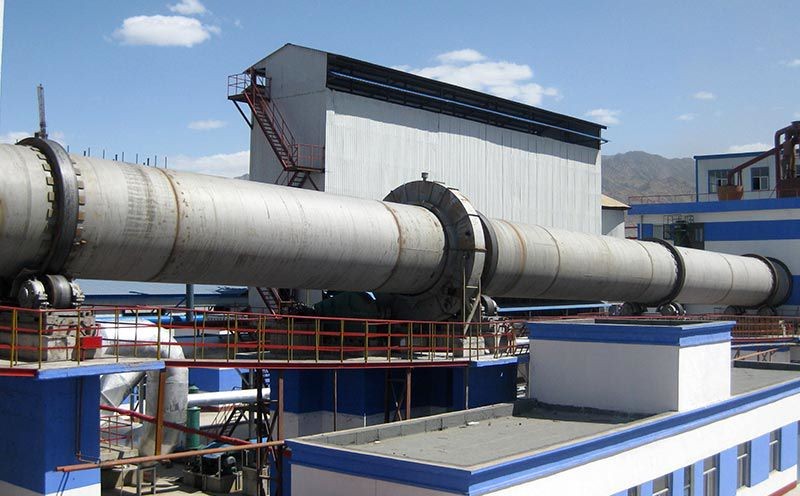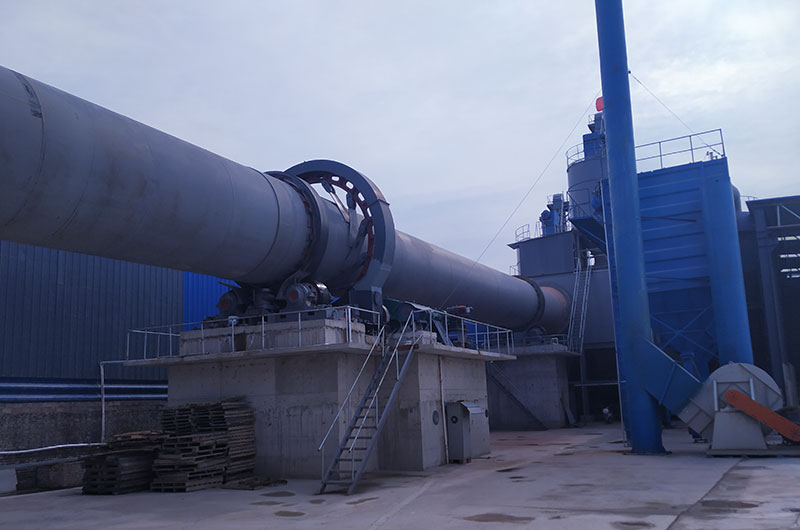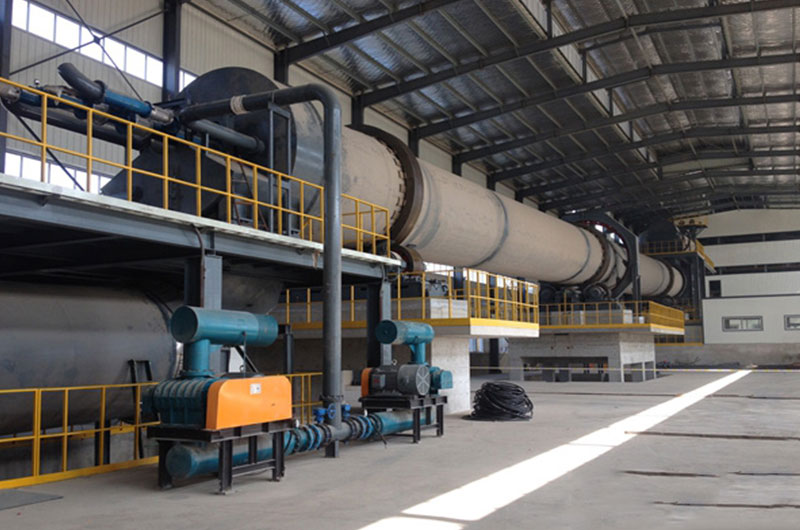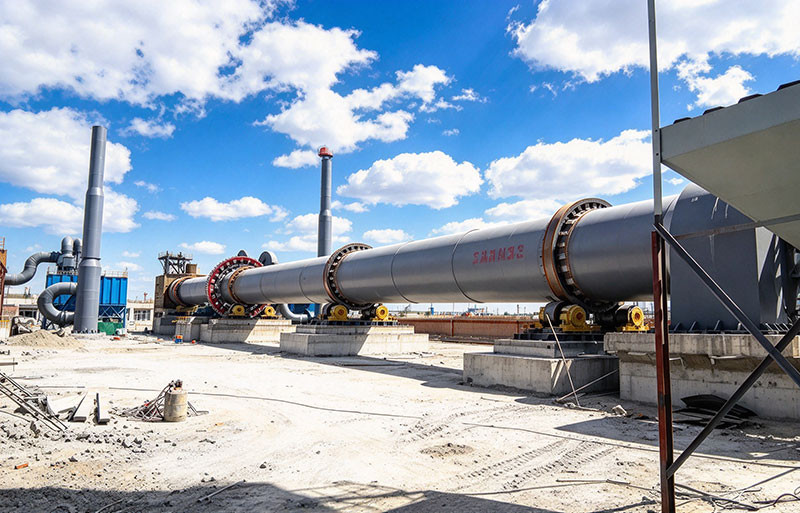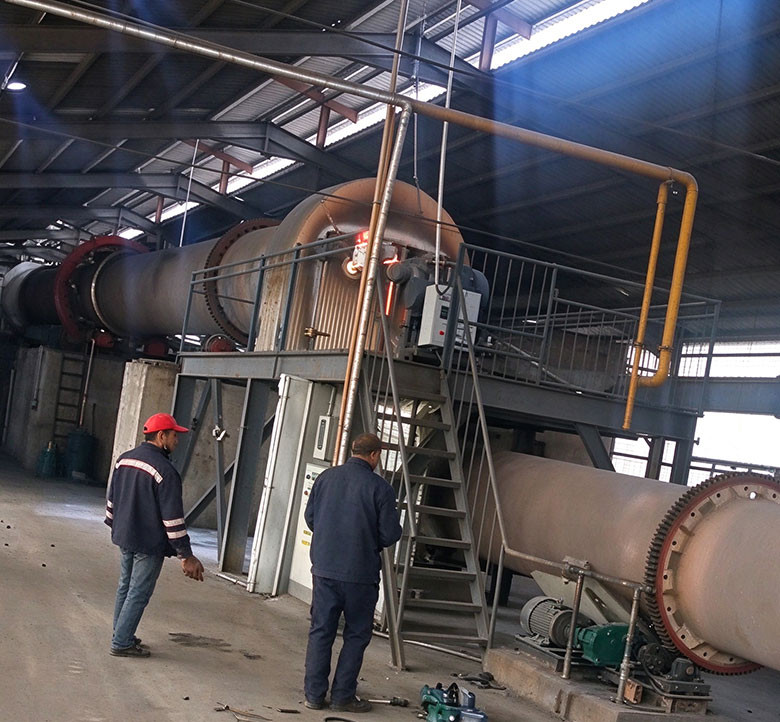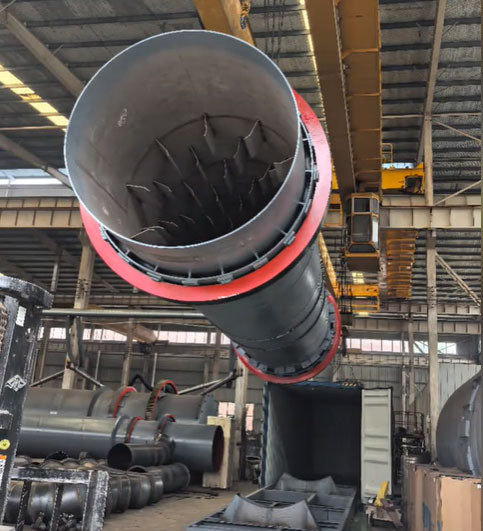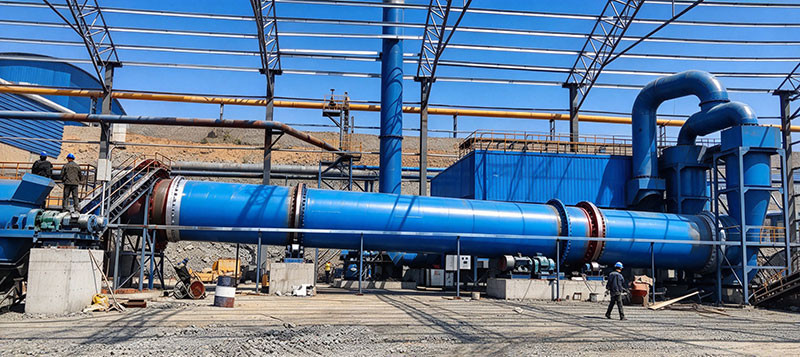
A cement rotary kiln is the heart of any cement plant. Its quality, design, and reliability will determine your output, energy consumption, maintenance costs, and profitability for the next 25–30 years. Choosing the right kiln — and the right supplier — is a decision that demands careful evaluation.
This article outlines the most important factors every buyer should consider before placing an order.
1. Verify the Manufacturer's Real Production Capability
This is the most important step — and the one most often skipped.
Are they a real factory or a trading company? Request a video call or schedule a factory visit to confirm the facility physically exists and is operational.
Can they fabricate critical components in-house? A qualified manufacturer should produce kiln shells, girth gears, tire rings, and support stations in its own workshops — not outsource them to third parties.
What heavy equipment is in their workshop? Look for plate rolling machines, CNC boring and milling machines, large-capacity cranes, submerged-arc welding stations, and post-weld heat treatment furnaces.
Tip: Always visit the factory before signing a contract, or at minimum, request a live video walkthrough with real-time Q&A.
2. Request Complete Technical Documentation
A qualified supplier should provide detailed engineering documents during the bidding phase — not after you place the order.
Key documents to request:
| Document | Why It Matters |
|---|---|
| Heat and mass balance | Confirms the supplier has done actual thermal engineering for your raw materials and fuel |
| Process flow diagram | Shows the complete system configuration |
| Equipment specification sheet | Details mechanical parameters: shell dimensions, thickness, gear specs, motor power |
| General arrangement drawing | Shows how equipment fits on your site |
| Shell thickness calculation report | Proves the design is based on real stress analysis, not a copied catalog value |
| Refractory lining plan | Zone-by-zone spec tailored to your raw material chemistry and fuel |
Red flag: If a supplier offers only a one-page quote with a price and a few general parameters, no real engineering has been done.
3. Focus on Kiln Shell Quality
The shell is the largest and most critical structural component. Look beyond diameter and length:
Plate material: Must be new steel from a recognized mill with mill certificates confirming chemical composition and mechanical properties. Common grades: Q345B, ASTM A516 Gr.70.
Thickness variation: Shell thickness should increase in the burning zone (32–50 mm) and decrease in the preheat zone (20–25 mm). Uniform thickness across the entire kiln indicates a lack of proper engineering.
Welding process: All major seams must use submerged-arc welding (SAW), not manual stick welding. Non-destructive testing (UT/RT) reports should be provided with delivery documentation.
Post-weld heat treatment: Mandatory for stress relief on all shell sections.
Ovality control: Each shell section should be measured and documented for ovality before shipment.
4. Specify Girth Gear and Pinion Requirements
The girth gear is the most expensive single component. Do not overlook its specifications:
Material: Cast steel (not cast iron) with material test certificates and ultrasonic inspection reports.
Tooth accuracy: AGMA Class 8 or ISO 1328 Grade 6 minimum.
Surface hardness: Induction-hardened to HB 300–350 or HRC 45–55, with test results provided.
Dual-pinion drive: Recommended for kilns above 4,000–5,000 TPD for load distribution and operational redundancy.
Pinion hardness: Must exceed girth gear tooth hardness (cheaper to replace the pinion than the gear).
5. Evaluate Support Station Design
Support stations bear the entire weight of the rotating kiln. Key items:
Tire rings: Forged steel preferred over cast for large kilns; verify material certificates.
Floating tire design: Essential for kilns above φ3.5 m to accommodate differential thermal expansion.
Trunnion roller bearings: Bronze-bushed with water-cooling — critical in hot climates.
Thrust roller: Must be included with hydraulic or mechanical adjustment for axial positioning.
Automatic lubrication: Standard for all bearing and roller surfaces.
6. Do Not Neglect the Preheater and Cooler
The kiln cannot perform well without properly matched upstream and downstream equipment:
Preheater: 5-stage cyclone with pre-calciner is standard for modern plants. Pre-calciner design must suit your fuel type.
Cooler: An undersized cooler causes high clinker exit temperature, poor grindability, and damage to downstream conveyors. Insist on a guaranteed clinker outlet temperature in the specification.
7. Get a Proper Refractory Specification
Refractory is rarely included in the basic equipment supply — but it drives your operating costs more than almost any other factor.
Request a zone-by-zone refractory plan based on your specific raw material chemistry and fuel.
Burning zone brick type (magnesia-spinel or magnesia-chrome) must be matched to your alkali, sulfur, and chlorine levels.
Ensure your supplier provides heat-up curves and curing protocols, plus supervision for the first refractory installation.
8. Define a Clear Scope of Supply
Ambiguity here is the most common source of buyer-supplier disputes. Confirm explicitly:
| Often Disputed | Verify |
|---|---|
| Refractory bricks | Usually excluded — confirm explicitly |
| Kiln hood & tertiary air duct | Sometimes included, sometimes not |
| Burner (kiln + calciner) | Brand, type, scope |
| DCS/PLC system | Hardware brand, software, I/O count |
| Field instruments | All included or only main ones? |
| Motors & VFDs | Brand and specs |
| Commissioning spare parts | Must be listed and priced |
Demand a detailed itemized equipment list as a contract annex. A single-line description is not sufficient.
9. Include Performance Guarantees
Every contract should have clear performance guarantees with defined test methods and remedies:
| Parameter | Typical Guarantee (5,000 TPD NSP Kiln) |
|---|---|
| Clinker capacity | ≥ 5,000 TPD (72-hour test) |
| Specific heat consumption | ≤ 730 kcal/kg clinker |
| Clinker outlet temperature | ≤ 65 °C + ambient |
| Stack dust emissions | ≤ 30 mg/Nm³ |
Include liquidated damages for non-compliance and clear conditions for formal acceptance.
10. Plan Installation and Commissioning Early
Foundations must be completed to the manufacturer's specifications before equipment arrives.
Arrange heavy-lift cranes for positioning large components (a single tire ring can weigh 40–60 tons).
Insist on experienced installation supervisors from the kiln supplier.
Budget 4–8 weeks for commissioning — rushing this phase is the most common cause of troubled start-ups.
11. Think Long-Term: After-Sales Support
Ask your supplier before purchasing:
What is the warranty period and coverage?
Do they maintain a spare parts inventory? What are lead times for critical parts?
Can they provide remote technical support and on-site service engineers?
Is a long-term service agreement (LTSA) available?
A supplier that cannot clearly answer these questions will be difficult to reach when problems arise.
12. Compare Total Cost — Not Just Purchase Price
A low-price kiln often costs more over its lifetime:
| Cost Factor | Low-Price Kiln | Quality Kiln |
|---|---|---|
| Initial equipment price | Lower | Higher |
| Annual fuel cost | Higher (lower efficiency) | Lower |
| Maintenance cost | Higher | Lower |
| Unplanned downtime | Significantly higher | Lower |
| 20-year total cost | Often higher | Often lower |
Invest in quality up front — it pays for itself many times over.
Quick-Reference Checklist
| # | Item | ✓ |
|---|---|---|
| 1 | Verify manufacturer's factory and production capability | ☐ |
| 2 | Request complete technical documentation | ☐ |
| 3 | Check shell material, thickness, welding, and ovality specs | ☐ |
| 4 | Verify girth gear material, hardness, and tooth accuracy | ☐ |
| 5 | Evaluate support station design | ☐ |
| 6 | Ensure preheater and cooler match the kiln | ☐ |
| 7 | Obtain zone-specific refractory specification | ☐ |
| 8 | Define clear, itemized scope of supply | ☐ |
| 9 | Include performance guarantees and LD clauses | ☐ |
| 10 | Plan installation and commissioning support | ☐ |
| 11 | Confirm after-sales service and spare parts capability | ☐ |
| 12 | Evaluate total cost of ownership over 20 years | ☐ |
Why Henan Hongke Heavy Industry?
Henan Hongke Heavy Industry Machinery Equipment Co., Ltd., based in Henan Province — China's heavy machinery heartland — manufactures rotary kiln systems for cement, lime, and metallurgical applications.
We produce all major components in-house — kiln shells, girth gears, tire rings, support stations, and drive systems — in our 80,000+ m² facility with heavy plate rolling machines, CNC machining centers, submerged-arc welding stations, and comprehensive quality control laboratories.
From process design to commissioning, we deliver reliable equipment, transparent communication, and responsive after-sales support worldwide.