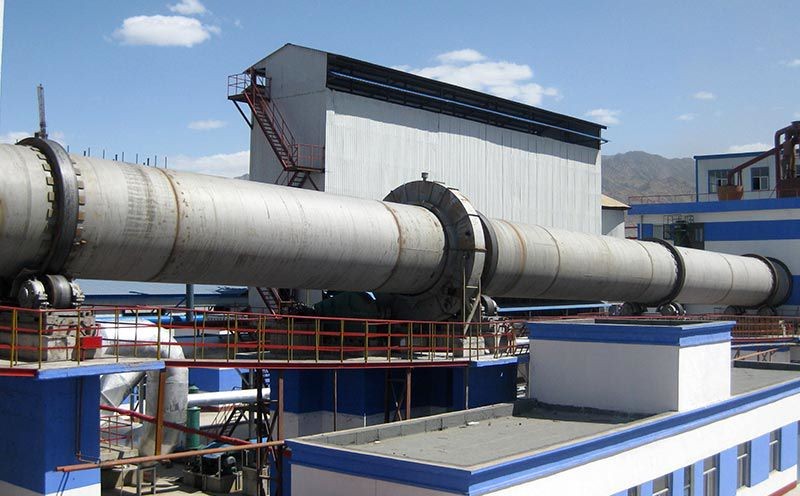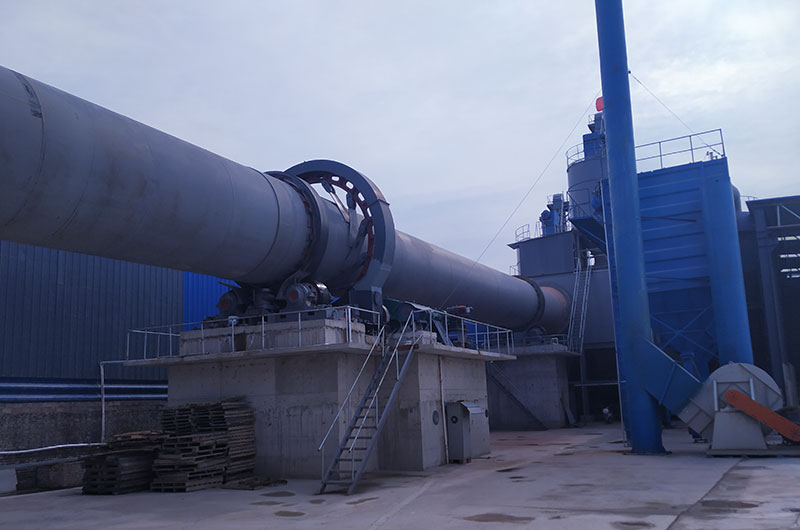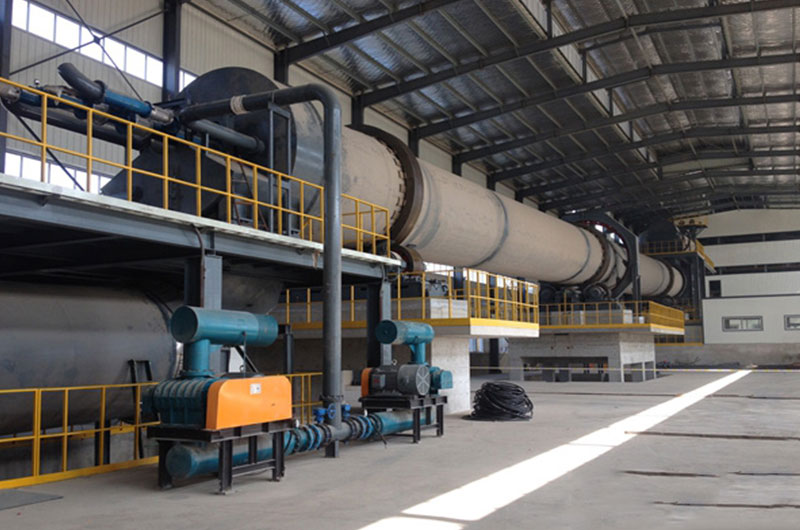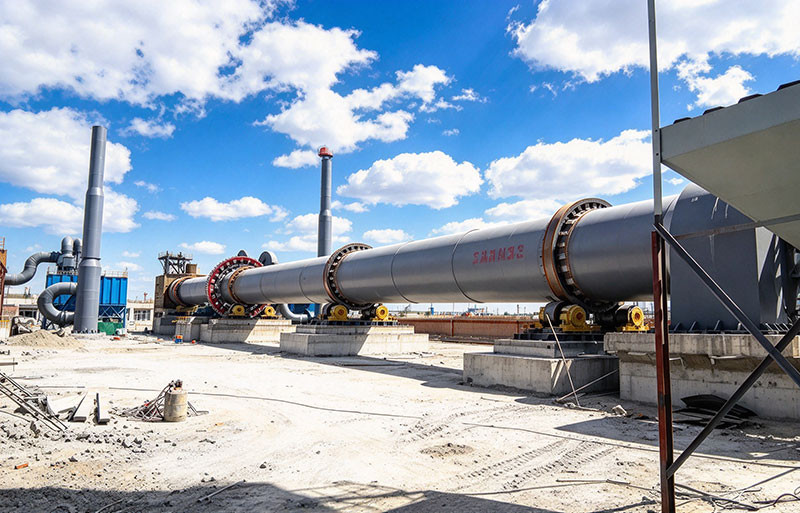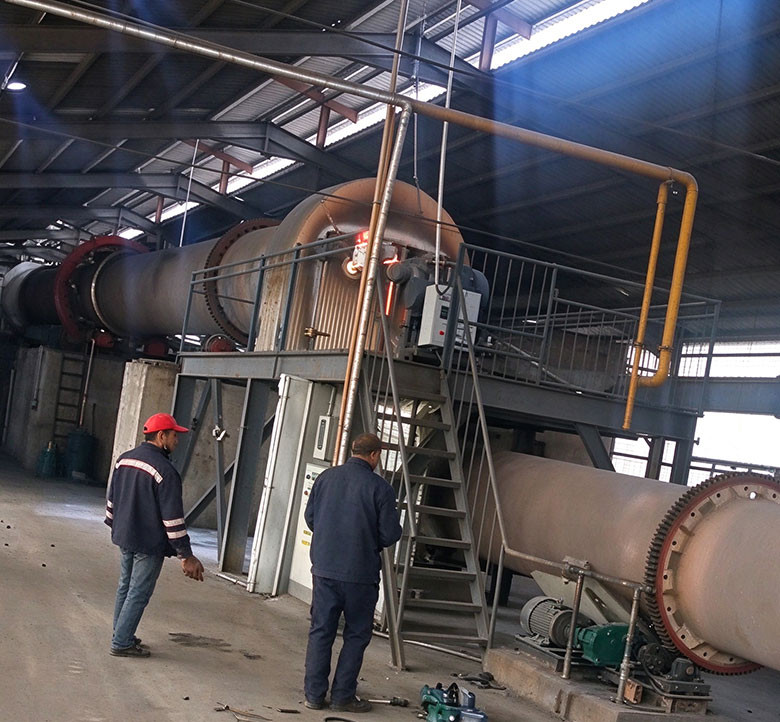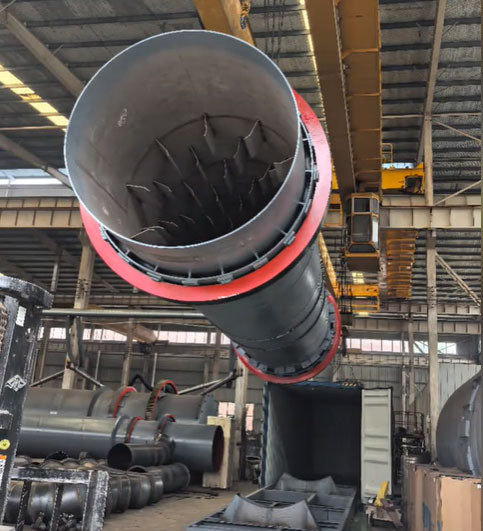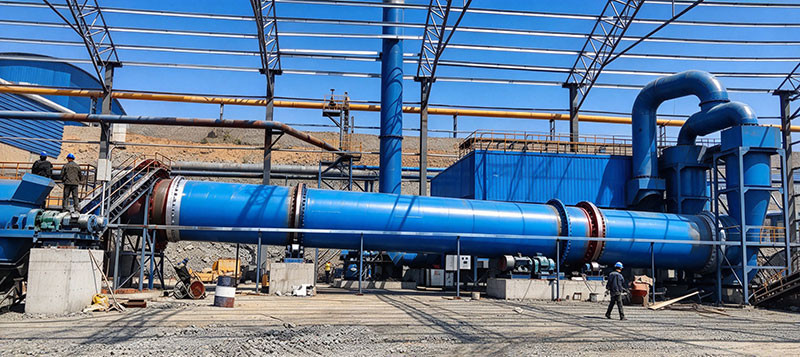
Rotary kilns are best known for cement and lime production, but they have become one of the most versatile tools in environmental engineering. Their ability to handle high temperatures, continuous throughput, and diverse feed materials makes them ideal for treating hazardous waste, contaminated soil, industrial sludge, and other problematic waste streams.
This article covers the major environmental applications of rotary kilns and explains why the rotary kiln is often the technology of choice for these challenging tasks.
1. Hazardous Waste Incineration
Temperature: 900–1,200 °C (kiln) + 1,100–1,200 °C (secondary combustion chamber)
The rotary kiln is the primary thermal unit in hazardous waste incineration. Solid, semi-solid, and liquid wastes enter the inclined rotating drum and pass through drying, pyrolysis, and combustion zones. Exhaust gases then pass through a secondary combustion chamber (≥2 seconds residence time) to ensure complete destruction of toxic compounds, including dioxins and furans, achieving a destruction and removal efficiency (DRE) exceeding 99.99%.
A downstream gas treatment system — rapid quench, acid gas scrubbing, activated carbon injection, and bag filter — cleans the exhaust before stack discharge.
Treats: Chemical residues, pharmaceutical waste, pesticide waste, organic solvents, contaminated soils, oily waste.
Why rotary kiln: Accepts solid, liquid, and semi-solid waste in one unit. Continuous operation for large volumes. Constant tumbling ensures uniform treatment.
2. Contaminated Soil Remediation
Temperature: 300–900 °C (depending on contaminant)
Thermal desorption in a rotary kiln is one of the most effective soil remediation technologies. Contaminated soil is heated to volatilize or decompose organic contaminants. Clean soil exits the kiln and can be returned to the excavation site as backfill — eliminating disposal costs.
| Contaminant | Temperature | Removal |
|---|---|---|
| Petroleum hydrocarbons (TPH) | 300–500 °C | > 99% |
| PAHs | 400–600 °C | > 99% |
| PCBs | 500–800 °C | > 99.99% |
| VOCs (BTEX, chlorinated solvents) | 300–500 °C | > 99% |
| Mercury | 600–800 °C | > 99% |
Why rotary kiln: Treats 50–200 t/h continuously. Treated soil is reusable. Fully adjustable temperature and residence time.
3. Industrial Sludge Treatment
Temperature: 200–1,100 °C
Rotary kilns address industrial sludge through two approaches:
Drying (200–500 °C): Reduces moisture from 75–85% to 20–30%, cutting volume by 60–75%. Produces dry, handleable material for incineration or landfill.
Incineration (800–1,100 °C): Destroys organic contaminants in hazardous sludge, producing inert ash.
Key features: Indirect heating option for VOC-containing sludge; corrosion-resistant stainless steel lining for chemically aggressive material; optimized internal flights for sticky, cohesive sludge.
Why rotary kiln: Handles the full moisture range. Continuous operation. Tolerates variable feed composition.
4. Spent Catalyst Regeneration and Metal Recovery
Temperature: 400–1,200 °C
Rotary kilns serve two functions in catalyst processing:
1.Decoking (400–700 °C): Burns off coke and contaminants to reactivate the catalyst substrate
2.Roasting for metal recovery (800–1,200 °C): Converts precious and base metals into extractable oxide forms for hydrometallurgical recovery
Applies to: FCC catalysts, hydroprocessing catalysts, automotive catalytic converters, SCR catalysts.
Why rotary kiln: Continuous processing, precise temperature control, effective contaminant removal.
5. Municipal Solid Waste (MSW) and RDF Processing
Temperature: 400–1,100 °C
Rotary kilns process MSW and refuse-derived fuel in two modes:
Direct incineration (850–1,100 °C): Burns waste to generate steam and electricity. Bottom ash can be processed for metal recovery and reused as construction aggregate.
Pyrolysis/gasification (400–700 °C): Thermally decomposes waste in oxygen-limited conditions to produce syngas (CO, H₂, CH₄) and solid char.
Why rotary kiln: Accepts mixed, unsorted waste. Handles high-moisture content. Dual capability (incineration or pyrolysis).
6. Scrap Tire Pyrolysis
Temperature: 400–700 °C
Waste tires are pyrolyzed in an oxygen-free environment, recovering four value streams:
| Product | Yield | Use |
|---|---|---|
| Pyrolysis oil | 35–45% | Industrial fuel or chemical feedstock |
| Carbon black | 30–35% | Rubber, inks, construction materials |
| Steel wire | 10–15% | Scrap metal |
| Syngas | 10–15% | Fuels the pyrolysis process itself |
Why rotary kiln: Continuous throughput (far exceeding batch reactors). Self-sustaining energy balance. Recovers all value streams from the tire.
7. Fly Ash Vitrification and Stabilization
Temperature: 800–1,450 °C
Fly ash from waste incineration and coal-fired plants often contains heavy metals requiring treatment:
Vitrification (1,200–1,450 °C): Melts fly ash into inert glass slag — heavy metals are locked in the glass matrix and cannot leach. Slag is reusable as construction aggregate.
Selective volatilization (800–1,100 °C): Drives off volatile metals (mercury, cadmium, lead, zinc) for capture and recovery, rendering the remaining ash non-hazardous.
Why rotary kiln: Complete heavy metal immobilization. Reduces hazardous waste volume by 50–70%. Converts disposal liability into reusable material.
8. Oil Sludge and Petroleum Waste Treatment
Temperature: 300–600 °C
Oil sludge from tank cleaning, refineries, and drilling operations is treated by thermal desorption:
1.Water evaporated
2.Petroleum hydrocarbons vaporized and recovered as oil
3.Cleaned solids meet non-hazardous disposal criteria
Why rotary kiln: Recovers valuable petroleum. Treated solids disposed as non-hazardous. Continuous operation for large volumes.
Summary
| Application | Temperature | Output |
|---|---|---|
| Hazardous waste incineration | 900–1,200 °C | Inert ash |
| Soil remediation | 300–900 °C | Clean, reusable soil |
| Sludge treatment | 200–1,100 °C | Dry material or inert ash |
| Catalyst regeneration | 400–1,200 °C | Reactivated catalyst or metal oxides |
| MSW / RDF processing | 400–1,100 °C | Energy or syngas |
| Tire pyrolysis | 400–700 °C | Oil, carbon black, steel, syngas |
| Fly ash treatment | 800–1,450 °C | Inert glass slag or recovered metals |
| Oil sludge treatment | 300–600 °C | Recovered oil; clean solids |
Why Henan Hongke Machinery?
Henan Hongke Heavy Machinery Co., Ltd. designs and manufactures rotary kiln systems specifically engineered for environmental applications:
Application-specific engineering — every kiln designed for the client's waste type and regulatory requirements
Complete system supply — kiln, feed handling, off-gas treatment, and residue management as an integrated package
In-house manufacturing — all major components fabricated in our own facility with full quality control
Indirect heating expertise — for applications requiring oil recovery, VOC control, or fire prevention
Global project experience — environmental kiln installations across Asia, Africa, and the Middle East