 WhatsApp:+86 155 1698 1316
 WeChat:+86 155 1698 1316
 Email:sales@rotarykilnchina.com
Every year, coal mining operations around the world generate hundreds of millions of tonnes of coal gangue — a hard, carbon-bearing rock that has no direct use as fuel. It sits in stockpiles, occupying land, contaminating groundwater, and posing fire risks. Disposing of it costs money. Leaving it in place creates liability.
What if that waste stream could become a revenue stream instead?
A coal gangue rotary kiln from Henan Hongke Heavy Machinery Co., Ltd. does exactly that. By applying controlled high-temperature calcination, our rotary kiln systems transform raw coal gangue into white calcined kaolin — a premium industrial mineral used in paper, paint, rubber, plastics, ceramics, and refractory products.
This page explains how our coal gangue rotary kiln works, why it is designed the way it is, and what it means for your bottom line.
What Is a Coal Gangue Rotary Kiln?
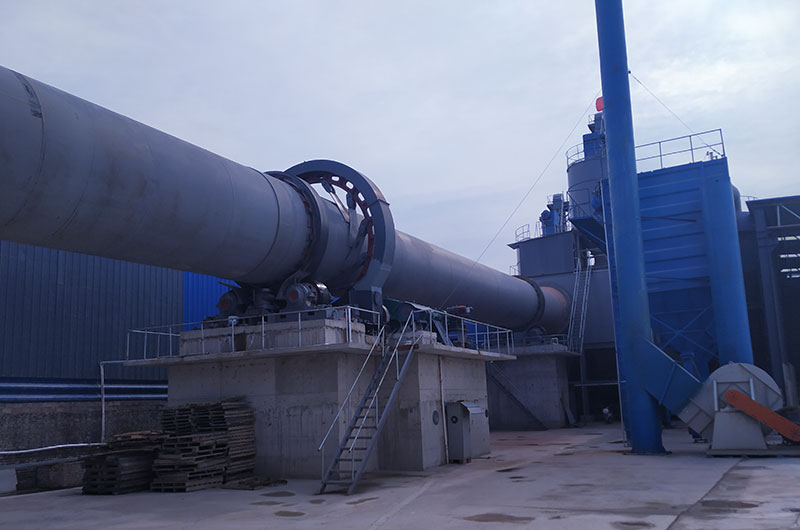
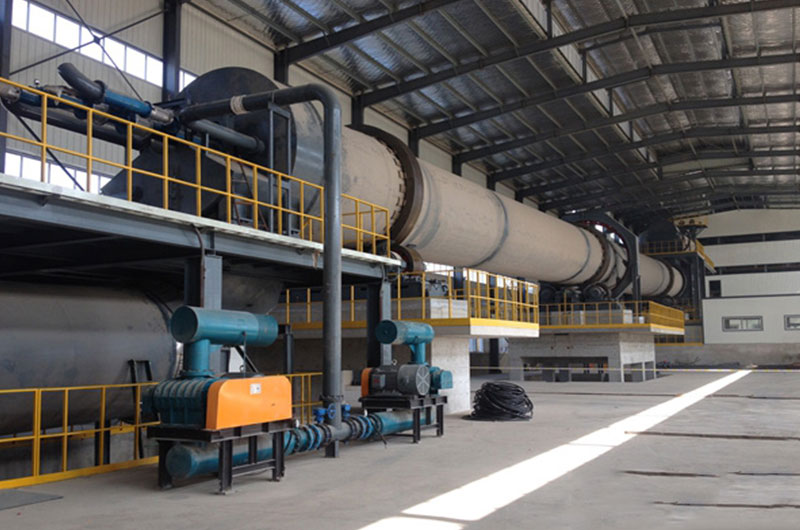
A coal gangue rotary kiln is a large-scale thermal processing furnace specifically engineered to calcine coal gangue — and similar aluminosilicate wastes such as coal-series kaolin and flint clay — at temperatures between 800 °C and 1,100 °C.
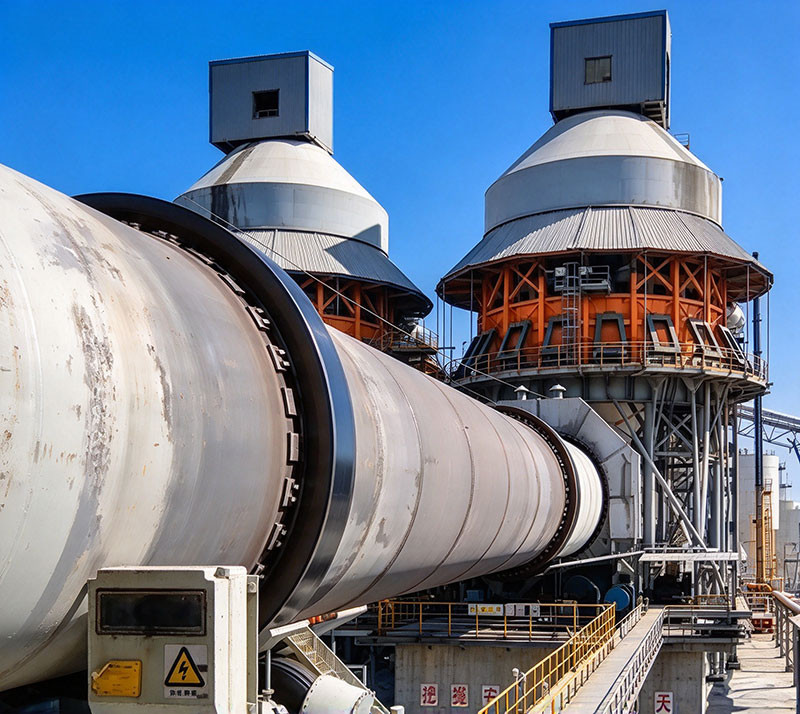
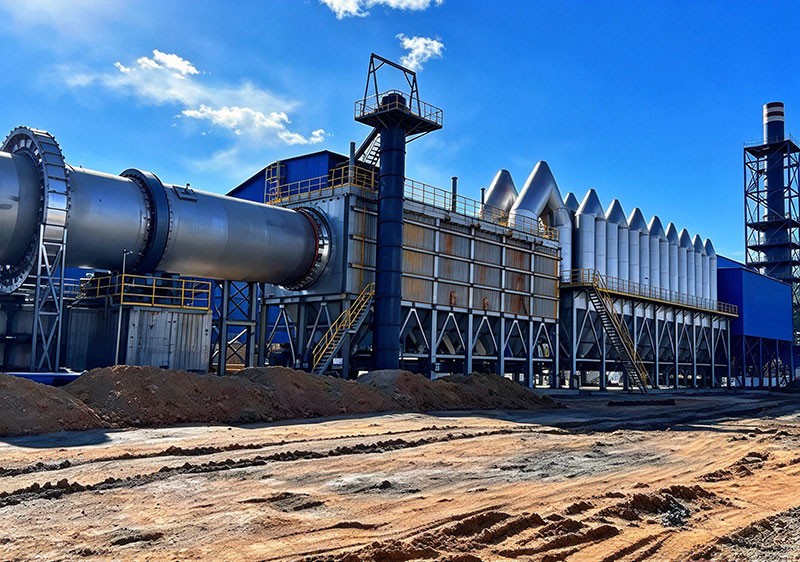
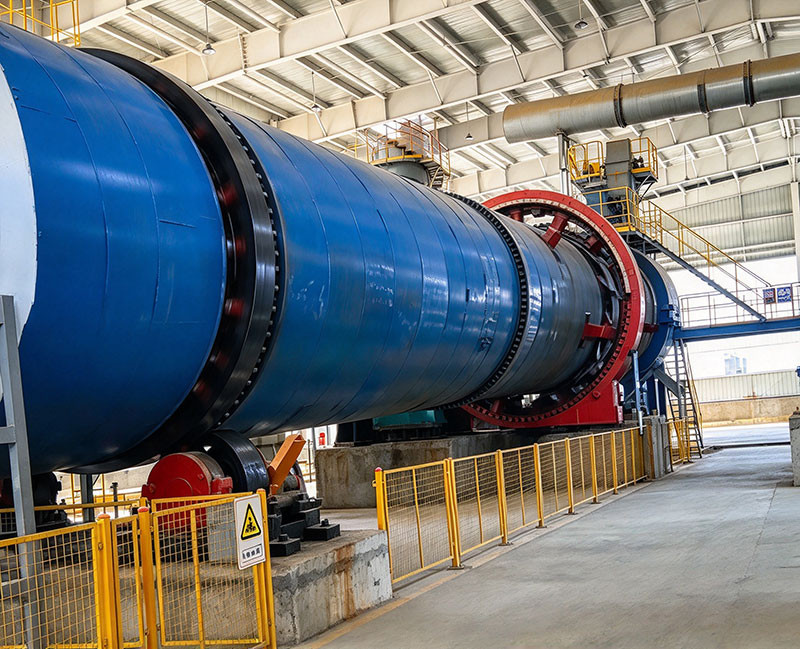
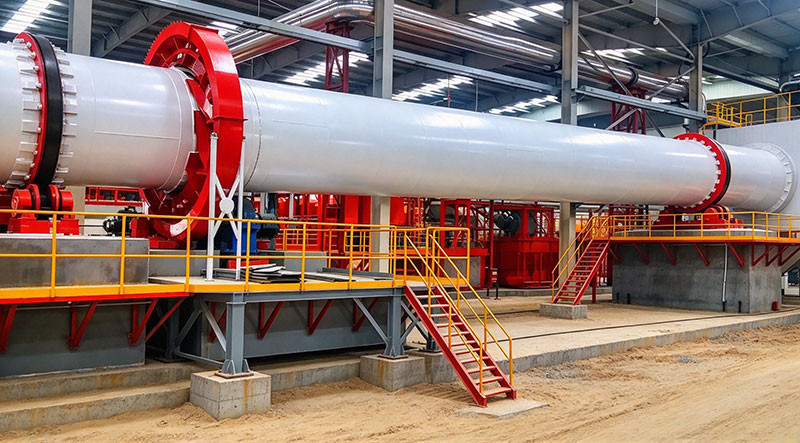
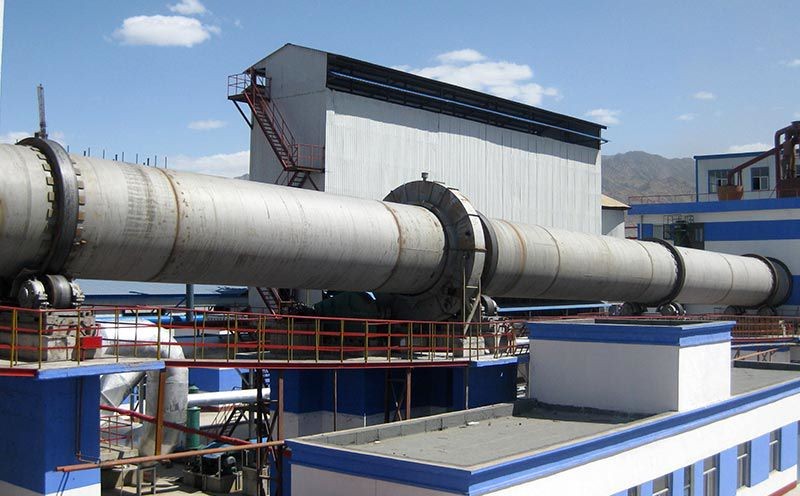
The rotary kiln itself is a long, cylindrical steel shell, slightly inclined from the horizontal, lined with refractory bricks, and rotating slowly on support rollers. Raw material enters at the elevated end, moves gradually through the heated zone by gravity and rotation, and exits at the lower end as a chemically transformed, bright white calcined product.
Henan Hongke Machinery designs and manufactures coal gangue rotary kilns in capacities ranging from 200 TPD to 1,000+ TPD, with kiln diameters from Ø 2.5 m to Ø 4.8 m, tailored to each client's raw material characteristics, target product specifications, and site conditions.
Why International Buyers Choose Henan Hongke Machinery
Before we explain the technical details, here is what matters most to you — the buyer investing significant capital in equipment that must run reliably for years on the other side of the world from its manufacturer.
You Need Equipment That Actually Works — Not Just Looks Good on Paper
Henan Hongke Heavy Machinery Co., Ltd. has been engineering rotary kilns for over 20 years. We are not a trading company reselling someone else's equipment. We design, manufacture, and test every kiln in our own factory. When you buy from us, you deal directly with the maker.
You Are Worried About Downtime
A rotary kiln that sits idle costs you thousands of dollars per hour in lost production. Our kilns are built with oversized bearings, heavy-duty gear drives, and refractory linings rated for continuous high-temperature operation. We design for > 92% annual availability — because uptime is not a feature, it is the entire point.
You Need a Supplier Who Stays After the Sale
Overseas equipment purchases fail most often at the installation and after-sales stage. Henan Hongke Machinery provides on-site installation supervision, commissioning support, and operator training — delivered by engineers who have personally commissioned dozens of kiln projects. After commissioning, our technical team remains available for remote troubleshooting, performance optimization, and spare parts supply throughout the equipment's operational life.
You Want to Know the Real Operating Cost — Not Just the Purchase Price
The purchase price of a rotary kiln is only part of your investment. Fuel consumption, refractory replacement, maintenance labor, and production yield determine your true cost per tonne of finished product. Henan Hongke Machinery designs every kiln for maximum thermal efficiency and minimum specific energy consumption, because we know that a cheap kiln with high fuel bills is not cheap at all.
Working Principle: How Coal Gangue Becomes White Calcined Kaolin
Understanding the process helps you evaluate whether this technology fits your raw material and market. Here is what happens inside and around the rotary kiln, step by step.
Step 1 — Crushing and Grinding
Raw coal gangue is first reduced in a jaw crusher, then ground in a ball mill or vertical mill to a fine powder — typically 200 mesh (75 µm) or finer. Fine grinding exposes the kaolinite mineral particles and ensures uniform heat transfer during calcination. A high-efficiency powder separator controls particle size distribution to minimize energy waste.
Step 2 — Pulping and Classification
The ground powder is mixed with water to form a slurry, then passed through hydrocyclones or spiral classifiers. This wet-processing stage accomplishes three things simultaneously:
Particle size separation — Oversize particles return to the mill; the target fraction moves forward.
Impurity removal — Iron oxides, carbon residues, and heavy minerals are separated out. This step is essential for achieving high whiteness in the final product.
Homogenization — Mixing into slurry ensures consistent composition across the entire production batch.
Optional magnetic separation can be added for feeds with high iron content.
Step 3 — Dewatering and Drying
The classified kaolin slurry is thickened and filtered to reduce moisture content. A rotary dryer then brings the moisture below 2%, producing a dry, free-flowing powder ready for the kiln. Controlling moisture at this stage is critical — excess water entering the kiln wastes fuel and disrupts the thermal profile.
Step 4 — Calcination in the Rotary Kiln (Core Process)
The dried kaolin feed enters the rotary kiln through a sealed feed system at the kiln's elevated end. As the kiln rotates at 0.5–3.5 RPM (adjusted based on capacity and product requirements), the material cascades gently through three thermal zones:
Preheating Zone (300–600 °C)Residual moisture is eliminated, and the material temperature is gradually raised to prevent thermal shock to the particles. The preheating zone is often extended by a preheater (such as a cyclone preheater or grate preheater) mounted before the kiln inlet, which recovers heat from exhaust gases and significantly reduces fuel consumption.
Calcination Zone (600–1,100 °C)This is where the fundamental transformation occurs. At approximately 500–600 °C, kaolinite (Al₂Si₂O₅(OH)₄) undergoes dehydroxylation — the hydroxyl groups within the crystal lattice are driven off as water vapor, converting the mineral into metakaolin (Al₂Si₂O₇):
Al₂Si₂O₅(OH)₄ → Al₂Si₂O₇ + 2H₂O↑
As temperature increases further:
Residual carbon inherited from the coal gangue is completely burned out, eliminating the dark color.
Iron-bearing impurities are oxidized and chemically stabilized, preventing yellowing.
The kaolinite's original layered crystal structure is destroyed and replaced by an amorphous or spinel-type phase, producing a material with high brightness, low oil absorption, and excellent whiteness.
The peak calcination temperature is precisely controlled — typically between 900 °C and 1,050 °C for standard calcined kaolin, or up to 1,100 °C for hard-grade products requiring maximum brightness and opacity.
Cooling ZoneNear the kiln outlet, the calcined material temperature is gradually reduced, preventing thermal shock and preserving the structural integrity of the kaolin particles before they exit the kiln.
Step 5 — Cooling, Milling, and Packaging
The hot calcined kaolin exits the kiln and enters a rotary cooler where it is cooled to below 80 °C. Depending on market requirements, a post-calcination grinding step (using a Raymond mill or ball mill with air classifier) may be applied to achieve the final target particle size — for example, 90% passing 2 µm for paper-grade products.
The finished calcined kaolin is then sampled, tested, and packaged in bulk bags or jumbo bags for shipment.
Performance Features: What Sets Henan Hongke Coal Gangue Rotary Kilns Apart
1. High Thermal Efficiency — Lower Fuel Cost per Tonne of Product
Fuel is the single largest operating expense in any calcination plant. Henan Hongke Machinery addresses this through:
Multi-stage preheating systems (cyclone preheater or shaft preheater) that recover waste heat from exhaust gases, raising feed temperature before it enters the kiln and reducing fuel demand by 15–25% compared to a conventional straight kiln.
Optimized kiln L/D ratio (length-to-diameter ratio) that ensures complete heat transfer without excessive kiln length.
Precision burner systems capable of firing natural gas, coal powder, heavy oil, or a combination, with flame shape and temperature profile adjustable to match your specific fuel source.
Kiln shell heat recovery — optional external heat shields and insulation systems that minimize radiant heat loss from the kiln surface.
What this means for you: Lower tonnes of fuel per tonne of product, which directly improves your profit margin — especially important in markets with volatile energy prices.
2. Consistent Product Quality — Whiteness You Can Count On
Your customers — paper mills, paint manufacturers, rubber compounders — demand consistent product quality, batch after batch. A rotary kiln that produces off-spec material even 5% of the time will cost you contracts.
Henan Hongke coal gangue rotary kilns deliver consistent quality through:
Automated temperature control with thermocouples at multiple points along the kiln length, feeding data to a PLC system that adjusts burner output in real time.
Uniform material bed dynamics — the kiln's rotational speed, slope, and internal lifter design are engineered to ensure thin, even material cascading through the hot zone, eliminating cold spots and over-fired particles.
Multi-zone atmosphere control — maintaining an oxidizing atmosphere throughout the calcination zone ensures complete carbon burnout, the single most important factor for achieving high whiteness.
Typical product quality from Henan Hongke coal gangue rotary kilns:
| Parameter | Specification |
|---|---|
| ISO Brightness | ≥ 90% |
| Residual Carbon | < 0.1% |
| Fe₂O₃ Content | < 0.8% (after magnetic separation) |
| Moisture | < 1% |
| Particle Size | Customizable (typically D90 < 2 µm after post-grinding) |
3. Robust Construction — Built for Continuous Industrial Operation
A rotary kiln operates at extreme temperatures for months between scheduled maintenance stops. There is no room for shortcuts in materials or fabrication.
Henan Hongke rotary kilns feature:
Kiln shell fabricated from Q235-C or Q345 carbon steel, with wall thickness engineered for the specific kiln diameter and length, ensuring long-term shell integrity under thermal cycling.
Refractory lining using high-alumina bricks in the calcination zone and insulating bricks in the preheating and cooling zones, selected to match the chemical environment and temperature profile of coal gangue calcination.
Riding rings (tyres) and support rollers manufactured from forged alloy steel, precision-machined for smooth, vibration-free rotation.
Gear drive system with a self-aligning pinion and a split girth gear, driven by a variable-frequency motor that allows precise speed adjustment.
Sealed kiln inlet and outlet with labyrinth or leaf-type seals to minimize cold air infiltration, which would reduce thermal efficiency and disrupt the temperature profile.
What this means for you: A kiln that runs reliably, year after year, with predictable maintenance schedules and no surprise failures.
4. Environmental Compliance — Designed for Today's Emission Standards
Environmental regulations are tightening worldwide. A kiln that cannot meet emission standards in your jurisdiction is not just a regulatory risk — it is a reputational and financial risk.
Henan Hongke Machinery equips every coal gangue rotary kiln with:
High-efficiency dust collection — Multi-stage cyclone separators followed by bag-type dust collectors, achieving emission concentrations below 30 mg/Nm³ (and lower if required by local regulations).
Desulfurization capability — Optional flue gas desulfurization (FGD) systems for feeds with high sulfur content, removing SO₂ to meet emission limits.
Noise control — Kiln drive, fan, and cooler systems are enclosed or insulated to meet industrial noise standards.
Zero-discharge water circuits — Closed-loop water recycling in the pulping and classification stages eliminates process wastewater discharge.
What this means for you: A production line that passes environmental permitting the first time, without costly retrofits.
5. Flexible Fuel Options — Adapted to Your Local Energy Market
Different regions have vastly different fuel economics. A kiln locked into one fuel type forces you to accept whatever price the local market offers.
Henan Hongke rotary kiln burner systems are designed for multi-fuel flexibility:
Natural gas — Clean, efficient, preferred where pipeline gas is available.
Pulverized coal — The most economical option in many coal-producing regions; our coal dust firing systems include grinding, storage, and pneumatic injection.
Heavy oil / diesel — For locations where gas and coal are unavailable or uneconomical.
Biomass or waste-derived fuels — Where environmental policy encourages alternative fuels, our burner systems can co-fire biomass or processed waste fuels alongside conventional fuels.
The burner system can be configured for your primary fuel with provisions for a backup fuel, giving you resilience against supply disruptions and price spikes.
6. Fully Automated Operation — Fewer Workers, Safer Workplace
Labor costs are rising everywhere. More importantly, manual operation of high-temperature industrial equipment introduces safety risks and quality variability.
Henan Hongke coal gangue rotary kilns come with a centralized PLC control system (Siemens, ABB, or equivalent) that manages:
Kiln rotational speed
Burner flame temperature and fuel flow
Material feed rate
Preheater and cooler temperatures
Dust collection system pressure drop
Emergency shutdown sequences
The system includes a touchscreen HMI (Human-Machine Interface) at the central control room, with optional remote monitoring capability via network connection. Alarms for abnormal conditions (over-temperature, bearing overheating, drive fault) are displayed and logged automatically.
What this means for you: A production line that can be operated by a small team of trained technicians, with consistent performance regardless of individual operator skill levels.
7. Customized Engineering — Because No Two Coal Gangue Sources Are the Same
Coal gangue is not a uniform material. Its mineralogy, carbon content, sulfur content, hardness, and moisture vary dramatically from one mining region to another. A one-size-fits-all kiln design will underperform — or fail.
Henan Hongke Machinery begins every project with a raw material analysis:
XRF / XRD testing of your coal gangue sample to determine chemical and mineral composition.
Thermal analysis (TGA/DSC) to identify the exact dehydroxylation and combustion temperatures.
Grindability testing to size the grinding equipment correctly.
Pilot-scale calcination trials (when warranted) to confirm product quality before committing to full-scale equipment.
Based on this data, our engineering team customizes:
Kiln diameter and length
Preheater and cooler configuration
Refractory lining type and thickness
Burner system capacity and fuel type
Grinding and classification equipment specifications
Dust collection and emission control system design
What this means for you: A production line optimized for your specific raw material, not a generic design adapted from a different application.
Technical Specifications
The table below shows representative specifications for Henan Hongke coal gangue rotary kilns. Actual specifications are customized for each project based on raw material analysis and capacity requirements.
| Parameter | Range |
|---|---|
| Production Capacity | 200 – 1,000+ TPD |
| Kiln Diameter | Ø 2.5 m – Ø 4.8 m |
| Kiln Length | 40 m – 72 m |
| Calcination Temperature | 800 – 1,100 °C |
| Rotational Speed | 0.5 – 3.5 RPM |
| Inclination | 3% – 4% |
| Fuel Type | Natural gas, pulverized coal, heavy oil, or multi-fuel |
| Product Whiteness (ISO) | ≥ 90% |
| Emission Standard | < 30 mg/Nm³ particulate (customizable) |
| Control System | PLC automated, remote monitoring optional |
Need a specific capacity or configuration? Contact our engineering team for a customized proposal.
Addressing Common Buyer Concerns
"How do I verify quality before the equipment ships?"
Every major component undergoes factory inspection and trial assembly at our manufacturing facility in Henan, China. We welcome — and encourage — third-party inspection by your appointed agency (SGS, BV, TÜV, or equivalent) before shipment. Full inspection reports, material certificates, and test records are provided with the shipment documentation.
"What happens if something breaks down?"
We maintain a comprehensive spare parts inventory for all standard rotary kiln components — girth gears, pinions, bearings, seals, refractory bricks, burner nozzles, and control system modules. Emergency spare parts can be shipped within 3–5 working days by air freight. For critical components, we recommend that clients maintain a local safety stock, and we provide a recommended spare parts list at the time of order with pricing and lead times.
"Can you support installation in my country?"
Yes. Henan Hongke Machinery provides installation supervision and commissioning services worldwide. Our experienced engineers travel to your site to guide your local installation crew through every phase — foundation alignment, shell erection, refractory installation, mechanical and electrical hookup, and hot commissioning. We also provide comprehensive operation and maintenance manuals in English (or other languages upon request) and conduct hands-on operator training during commissioning.
"How long will it take from order to delivery?"
Typical lead time for a coal gangue rotary kiln production line is 4–8 months from order confirmation, depending on capacity and configuration. This includes engineering design, manufacturing, factory testing, and shipping. Installation and commissioning typically require an additional 2–4 months on site, depending on local conditions.
"What is the return on investment?"
While ROI varies by region, raw material cost, and product market price, coal gangue calcination projects typically achieve payback within 2–4 years. The key drivers are:
Near-zero raw material cost — Coal gangue is waste; in many regions, you are paid to take it.
High-value product — Calcined kaolin sells for 500+ per tonne depending on grade and market.
Growing demand — Paper, paint, and polymer industries are increasing their use of calcined kaolin as a sustainable alternative to petroleum-based fillers.
We can provide a preliminary economic analysis based on your specific raw material, local fuel cost, and target product specifications — just send us your inquiry.
Applications of Calcined Kaolin from Coal Gangue
The white calcined kaolin produced by Henan Hongke coal gangue rotary kilns serves a wide range of industries:
Paper Industry — As a coating and filler pigment, improving paper brightness, opacity, and printability.
Paint and Coatings — As a functional extender, enhancing whiteness, hiding power, and rheological properties.
Rubber and Plastics — As a reinforcing filler, improving mechanical strength and surface finish.
Ceramics — As a key raw material for high-grade porcelain and sanitary ware.
Refractory Products — As a high-alumina component in firebricks and castables.
Fiberglass — As a silica-alumina source for glass fiber production.
Get a Customized Proposal for Your Coal Gangue Rotary Kiln Project
Every coal gangue calcination project is unique. The right kiln configuration, capacity, and process flow depend on your raw material composition, target product specifications, available fuel, local environmental regulations, and market requirements.
Henan Hongke Heavy Machinery Co., Ltd. is ready to help you evaluate the feasibility and design the optimal solution. Here is how to get started:
●
1. Send us your coal gangue sample — We will conduct chemical, mineralogical, and thermal analysis at no charge for qualified inquiries.
●
2. Tell us your requirements — Target capacity, product specifications, fuel type, and site location.
●
3. Receive a customized proposal — Including process flow design, equipment list, technical specifications, and budgetary pricing.