 WhatsApp:+86 155 1698 1316
 WeChat:+86 155 1698 1316
 Email:sales@rotarykilnchina.com
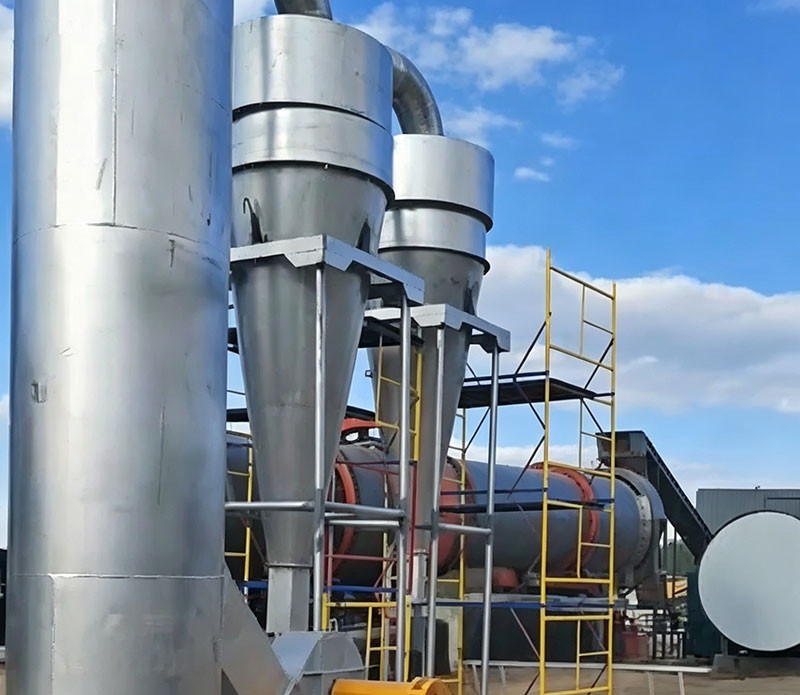
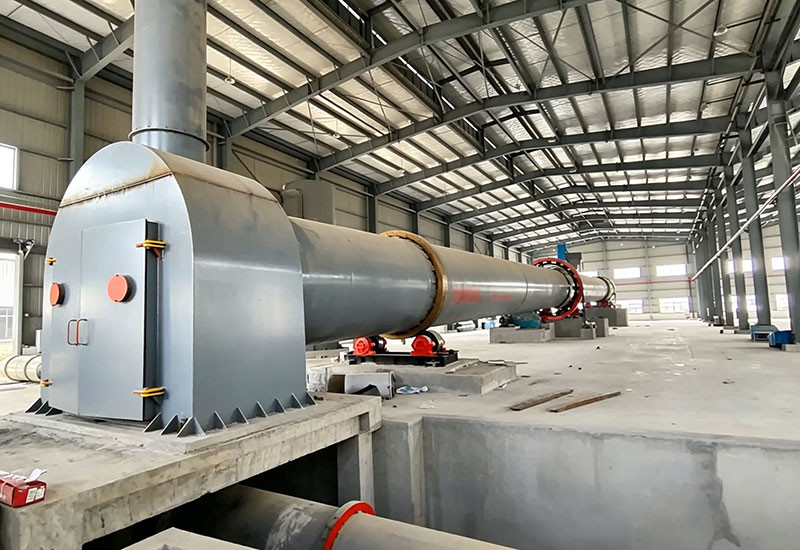
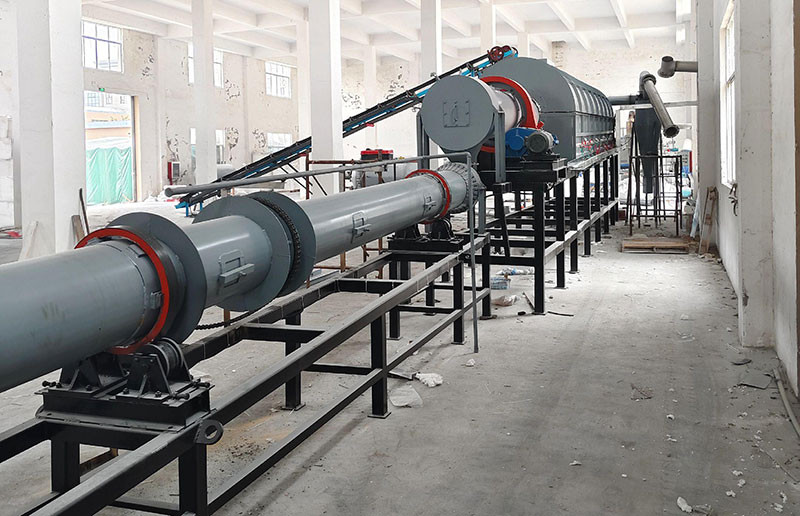
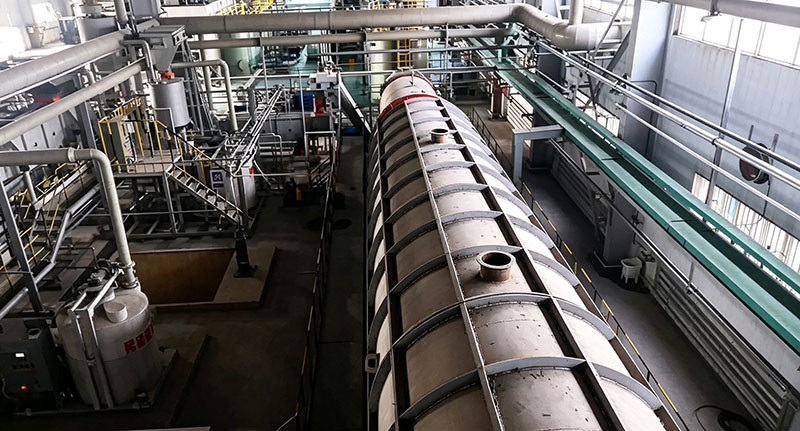
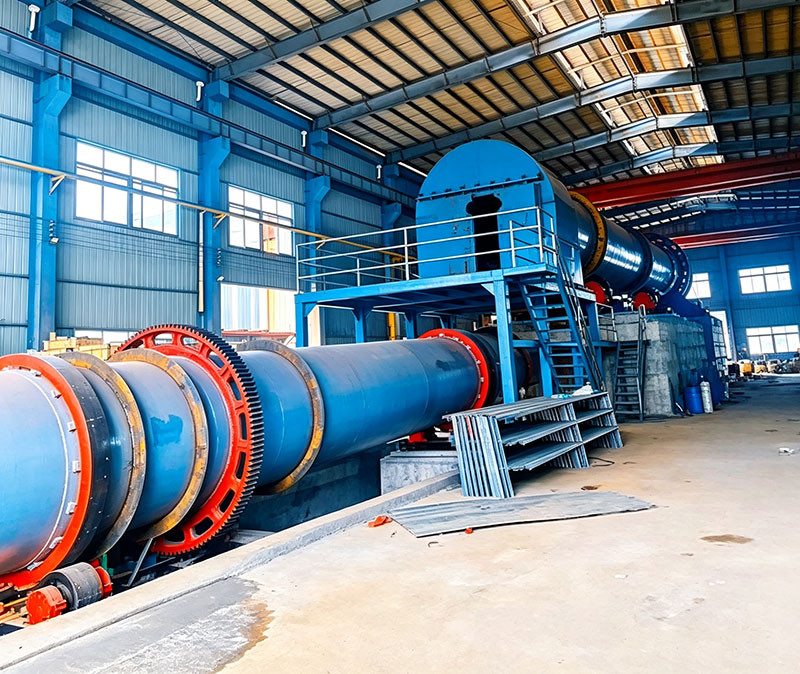
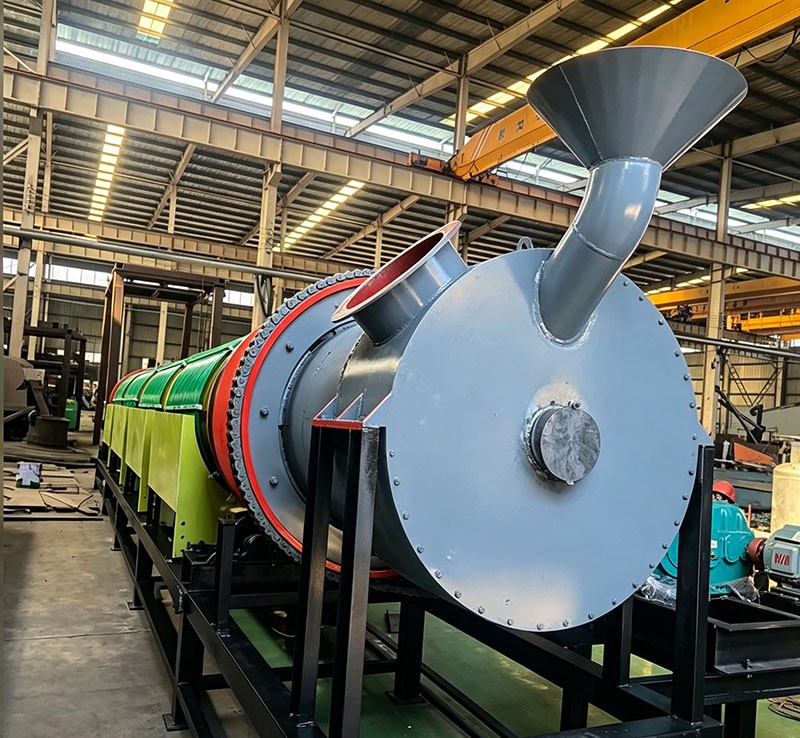
Henan Hongke Heavy Machinery Co., Ltd. has successfully shipped a Φ800×12m electromagnetic induction rotary kiln for gold ore de-arsenification. This case study focuses on the engineering specifications, performance data, and process control parameters that define this system.
System Overview
| Parameter | Specification |
|---|---|
| Kiln shell diameter (inner) | 800 mm |
| Kiln shell length | 12,000 mm (12 m) |
| L/D ratio | 15 : 1 |
| Heating method | Medium-frequency electromagnetic induction |
| Operating temperature range | 200–1,200°C (adjustable) |
| Temperature control accuracy | ±1–5°C (zone-dependent) |
| Thermal efficiency | ≥95% |
| Kiln slope | 2–4% (adjustable) |
| Rotational speed | 0.5–5 rpm (variable frequency drive) |
| Shell material | Q235-B carbon steel |
| Power supply | Custom-engineered (voltage/frequency matched to site) |
Electromagnetic Heating System
| Component | Specification |
|---|---|
| Induction coil type | Water-cooled copper winding, multi-turn configuration |
| Coil arrangement | Helical winding along kiln length (zoned control) |
| Number of heating zones | 3 independently controllable zones |
| Frequency range | 1–10 kHz (optimized for shell thickness) |
| Power control | IGBT-based, PWM modulated |
| Temperature sensing | K-type thermocouples (shell + material bed) + IR pyrometer (optional) |
Heating principle: Alternating current through the induction coils generates a high-frequency magnetic field, inducing eddy currents in the kiln shell. The shell acts as the heating element, transferring thermal energy to the material through conduction and radiation. No combustion, no flame, no flue gas losses.
Power conversion efficiency: 92–96% from grid to thermal energy in the shell — compared to 55–65% typical for fuel-fired rotary kilns .
Process Control & Automation
| Control Function | Specification |
|---|---|
| Control platform | PLC-based with HMI touchscreen interface |
| Temperature control loops | 3 independent PID loops (one per heating zone) |
| Temperature monitoring points | 8 thermocouples along shell + 3 material bed probes |
| Speed control | Closed-loop VFD with encoder feedback |
| Data logging | Real-time trending + historical data export (CSV) |
| Alarm system | Audible/visual alarms for overtemperature, power fault, cooling failure |
| Remote access | Ethernet/Modbus ready (optional SCADA integration) |
Material Processing Parameters
| Parameter | Specification / Range |
|---|---|
| Target material | Refractory gold ore (arsenopyrite-bearing) |
| Feed size | ≤ 20 mm (recommended) |
| Throughput | Custom-engineered to customer requirement (typical: 0.5–2.0 TPH) |
| Residence time | 20–60 min (adjustable via slope + speed) |
| De-arsenification temperature | 550–750°C (optimized for arsenopyrite decomposition) |
| Atmosphere | Air or controlled (inert/reducing) — seal system dependent |
| Arsenic removal rate | ≥95% (at optimized conditions) |
| Product temperature (discharge) | ≤150°C (after cooling zone) |
Mechanical & Structural Specifications
| Component | Specification |
|---|---|
| Shell thickness | 12 mm (standard) / 16 mm (heavy-duty option) |
| Tyres (riding rings) | Cast steel, machined surface, 2 units |
| Support rollers | Double-row spherical roller bearings, self-aligning |
| Thrust roller | Mechanical stop type, adjustable |
| Drive system | Helical gear reducer + pinion / girth gear arrangement |
| Main motor power | 7.5–15 kW (depending on throughput) |
| Auxiliary drive | Manual backup (for positioning/maintenance) |
| Sealing system | Labyrinth + spring-loaded graphite seals (head + tail) |
| Foundation type | Steel base frame (skid-mounted) or concrete (site-built) |
Cooling System (Integrated)
| Parameter | Specification |
|---|---|
| Cooling method | Water-cooled induction coils + air-cooled power cabinet |
| Cooling water temperature | ≤35°C inlet |
| Cooling water flow | 8–12 m³/h (closed-loop recommended) |
| Water quality requirement | Softened/deionized (≤50 µS/cm conductivity) |
Environmental & Safety Features
| Feature | Specification |
|---|---|
| Emissions | Zero combustion flue gases (SOx, NOx, CO, particulates from fuel) |
| Arsenic off-gas treatment | Integrated capture system (scrubber / condenser — customer-supplied or optional) |
| EMI shielding | Copper mesh shielding around coil zone (reduces radiated emissions) |
| Operator safety | Thermal insulation on coil housing; emergency stop system |
| Cooling failure protection | Interlock shutdown on water flow/pressure loss |
| Grounding | Dedicated earth connection to prevent stray currents |
Delivery Scope
This Φ800×12m electromagnetic rotary kiln was shipped as a fully integrated system, including:
| Item | Quantity |
|---|---|
| Kiln shell (with tyres and girth gear mounted) | 1 |
| Induction coil assembly (zoned, water-cooled) | 1 set |
| Support roller stations | 2 |
| Thrust roller assembly | 1 |
| Drive unit (motor + reducer + pinion) | 1 |
| VFD control panel | 1 |
| PLC-based temperature control cabinet | 1 |
| Water manifold (with flow/pressure sensors) | 1 |
| Sealing system (head and tail) | 1 set |
| Technical documentation (drawings, manuals) | 1 set |
Comparison: Electromagnetic vs. Fuel-Fired Rotary Kiln
| Parameter | Electromagnetic (Φ800×12m) | Fuel-Fired (Comparable) |
|---|---|---|
| Thermal efficiency | ≥95% | 55–65% |
| Temperature accuracy | ±1–5°C | ±15–30°C |
| CO₂ emissions | Zero (from heating) | Significant |
| SOx/NOx emissions | Zero | Present (depending on fuel) |
| Start-up time (cold to operating) | 20–30 min | 60–120 min |
| Noise level | ≤75 dB | 85–95 dB |
| Maintenance frequency | Low (no burner, no refractory hot-face wear) | Moderate to high |
| Footprint | Compact | Larger (burner + ducting + stack) |
Conclusion: Technical Advantages for Gold Ore Processing
The Φ800×12m electromagnetic rotary kiln delivers:
≥95% thermal efficiency — direct heating, no flue gas losses
±1–5°C temperature control — essential for consistent arsenic volatilization
Zero combustion emissions — eliminates SOx/NOx compliance burden
Rapid start-up and shut-down — improves process flexibility
Reduced maintenance — no burner, no combustion chamber, minimal shell hot-spot stress
For gold ore de-arsenification or other precision thermal processing applications requiring clean, efficient, and controllable heat, this system provides a measurable operational advantage.
For detailed engineering specifications, process modeling, or a customized sizing proposal, contact Henan Hongke Heavy Machinery Co., Ltd.
Henan Hongke Heavy Machinery Co., Ltd.
Rotary Kilns | Dryers | Ball Mills | Crushers – Engineering for Precision Thermal Processing